
Flat Roof Seam Repair

Updated: Aug 13, 2025

In a recent article, here on our blog and on our website, we took a look at some of the issues of roof seam separation, particularly where those seams cross over and turn upwards at parapets at flat roof. Often, here in Capitol hill, when working on the typical flat roofs, we find that seams are either improperly installed by the original installation contractor or in states of deterioration which need to be repaired, in cases just like those parapet issues. Repairs of these seams can sometimes be done by overlay which is an application of either reinforced or unreinforced materials on top of the original seam. In most cases overlay type processes require some amendment or improvement to the existing substrate seam before overlay, but in almost all cases the new overlay will extend from the upper part of the overlapping membrane onto the top of the lower strip or roll of roofing material. Most low slope flat roofs here in Washington, DC are made with roll materials. In many cases, those roll type materials are parts of single-ply roof systems. Often, in older systems, roofs may be built with a heavier type of roofing referred to as built-up roofing. In some cases those built-up roofs are covered with an aggregate (stone) type ballast which holds the otherwise loose laid materials in position.
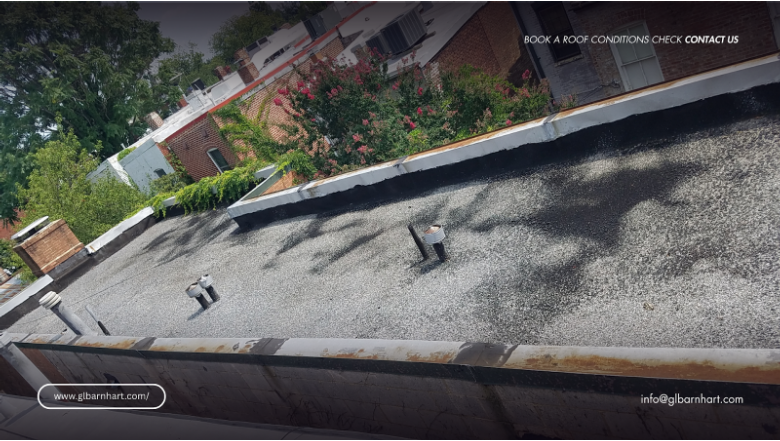
The picture below shows a very old built-up roof, over 45 years old with an aggregate ballast.
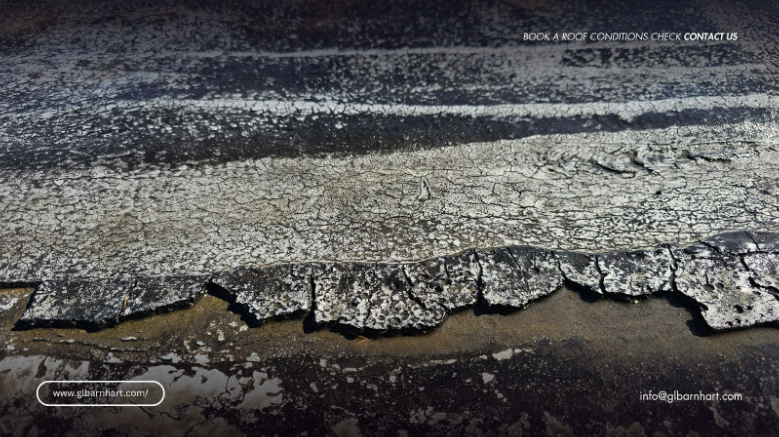
A photograph of a concentric or overlapping type of fully welded granulated modified bitumen type membrane follows in the photo below. However, often, during new installations where there are not constraints related to bonding with adjoining roofs at neighboring properties, we will instead recommend a thermoset or polymer based low slope roof systems such as TPO. Thermoplastic polyolefin is one of the main chemical chains used in the polymer that constitutes this type of roofing material. Many old-timers in the industry will often refer to these types of roofs as “rubber roofs”, but they’re not actually made from rubber. Instead, the polymers used will have an elastomeric type filler, in most cases, which is similar to the characteristics that we associate with rubber.
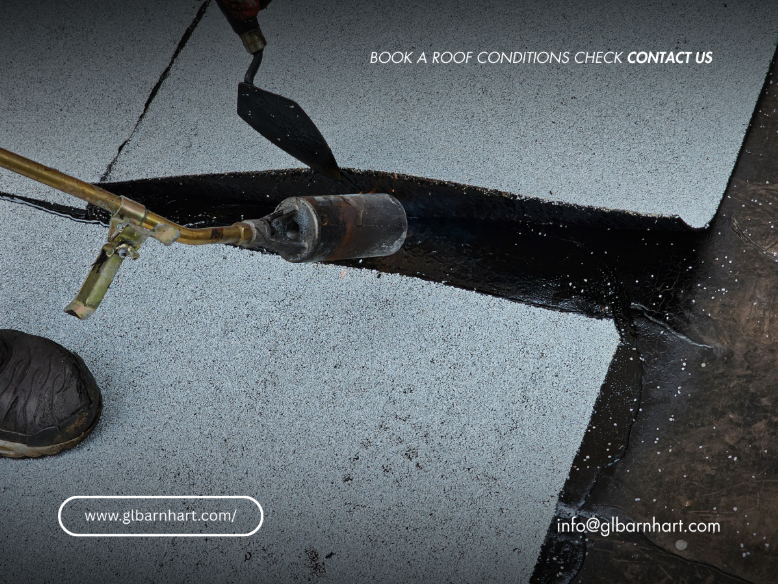
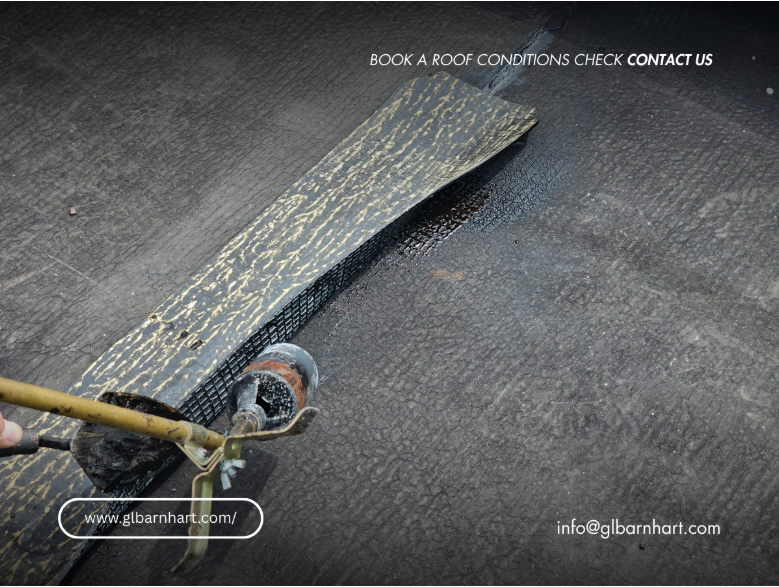
There are multiple different types of modified bitumen membranes and also several types of TPO or thermoplastic polyolefin membranes. The picture below shows the welding of a modified bitumen smooth membrane. Membranes like this have two main families of groupings, one of which is SBS and the other is APP. The one shown below is an APP type membrane and generally has a lesser amount of emulsion that is melted or which bleeds out from the underside of the membrane during the welding process. Proper coating though in almost all cases or positions in the configuration of the roof requires a minimum amount of bleed out to indicate that the underside of the membrane and welded at the correct temperature range. In case of this particular roof repair project, that we completed recently, we found that several of the successive lap joints were welded insufficiently, meaning they were welded at a temperature too low to make proper adhesion or connection to the substrate membrane.Those individual lap joints had separated or delaminated from the substrate and created a pocket that could essentially allow foreign materials such as tree debris like sticks and leaves to accumulate underneath of the overlap area. With an open pocket like that, it’s possible for water to not only run upwards into that joint area during the heaviest times of precipitation, but since organic material began to fill those void areas, those materials will actually wick water upwards away from the remainder of the flow of water on the rooftop.
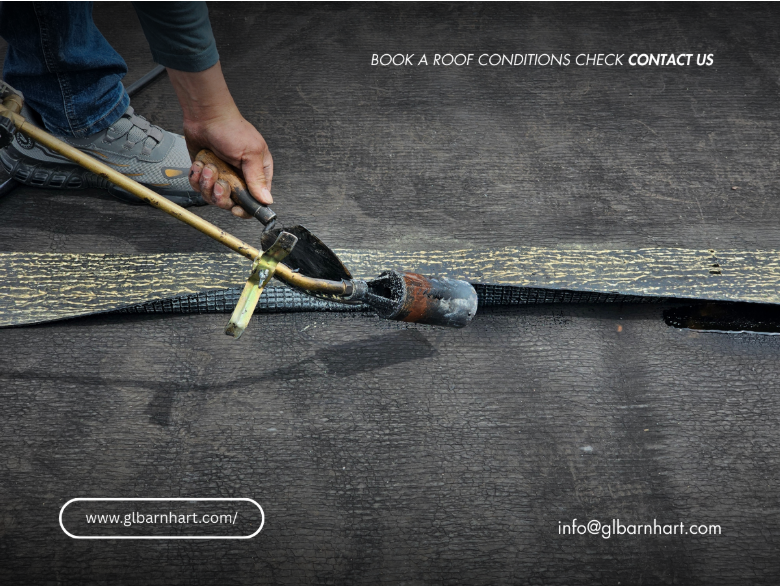
The next picture below shows another angle of the same area of repair. Flat roofs generally need to be checked at least every year or so. It’s a good idea to have a company like ours on call, here at GL Barnhart Construction we’re happy to help our customers. The most proactive approach is to simply schedule a routine roof consultation. Fees are comparatively inexpensive and well worth the value. And in almost all cases, we don’t just check the roof itself. In fact, there’s also often a wide range of other areas just outside of the roof itself which can cause leakage or problems to the roof system. We take a look at at least the core grouping of these areas. For example, a wide range of different types of mechanical service devices or installations often penetrate through the roof and / or butt against the roof system. Plumbing vent pipes from kitchens, bathrooms and / or laundry rooms will generally penetrate through the roof membrane itself and have to be sealed properly during the roof installation. After the roof installation, any work done by plumbing contractors to run plumbing vents, should be checked by a company like ours who will verify these elements are properly sealed. HVAC contractors generally will run a range of elements through the roof itself, either in pitch pockets or in piping sleeves. Their piping sleeves, in most cases, should be installed in a gooseneck type configuration that prohibits the passive and typical rainfall from entering into the orifice or opening of their piping.
If you have a flat roof here in Capitol Hill, DC, feel free to reach out to us by sending us an email at info@glbarnhart.com. We can set up a phone call or a meeting on site to talk about options and proactive timelines for maintenance checkups and or repairs and re-roofing as needed.


Comments