
Pipe Penetration Boot Delamination in a TPO Roof

A while back doing one of our many roof condition surveys, a typical procedure we do to check the condition of a roof looking at a series of specific areas, shadow visually stood out, around the edge of one of the pipe penetration boots. Normally, seems, laps, and terminations of a low slope single-ply roof membrane can be probed, with a specific tool, to check for proper adhesion. In this case though we could see something was wrong before we even got close enough to touch it.
After getting closer and lifting the loose edge of the pipe boot, we could see it had been completely delaminated for some time. In fact, as you can see in the photo below, the entire area under the roof boot was filled with dirt and tree debris. If those types of debris can get under the protective penetration cover then water can as well. The pipe boot works like a type of roof flashing and it is intended to seal the joint between the flat / low-slope planar roof and the pipe which goes through the roof system.
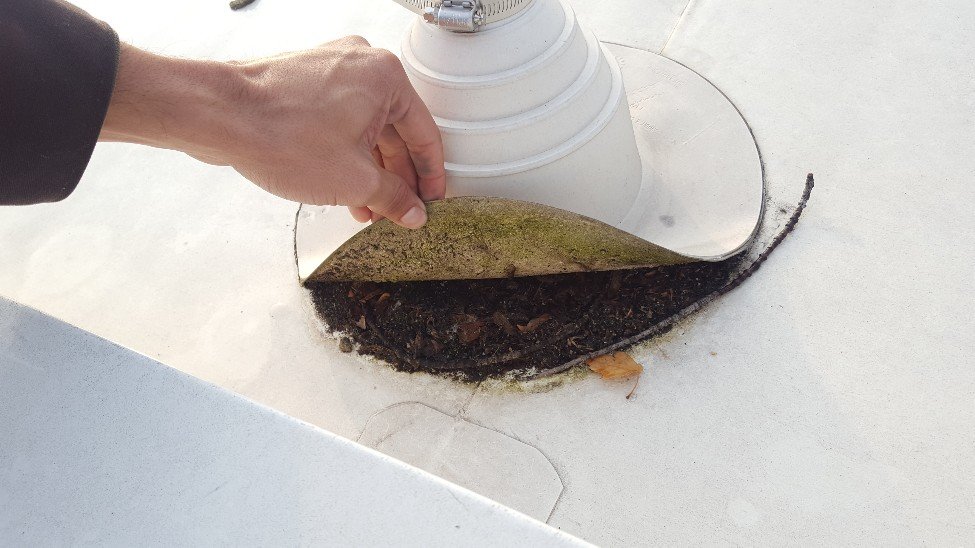
Here that protective cover was installed improperly and the seal had failed. Defects like this can normally be traced back to inadequate QAQC, at the initial installation. As shown here, the heat seal application had been omitted or inadequately applied.
TPO (Thermoplastic Polyolefin) is a popular single-ply roofing membrane used in low-slope applications. It is a blended polymer consisting of polypropylene and ethylene-propylene rubber, which offers excellent weathering resistance, flexibility, and durability. TPO membranes are typically white or light-colored, reflecting a significant portion of the sun’s rays, contributing to energy efficiency and reducing cooling costs.
Roof penetrations are inevitable in most flat roofing systems, as they accommodate various building components and systems that need to pass through the roof deck. Common examples include plumbing vents, HVAC ductwork, electrical conduits, and refrigerant lines for mechanical equipment. Proper sealing and flashing of these penetrations are critical to preventing water infiltration and maintaining the integrity of the roofing system.
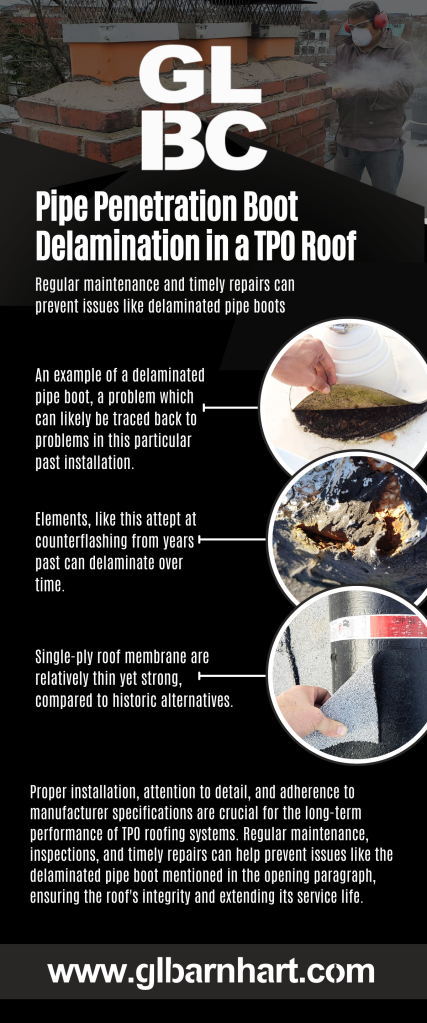
In the adjacent graphic you can see examples of different types of flat roof and roof related flashing delamination. This graphic also shows an example of a granulated modified bitumen membrane in a roll before installation.
The installation of TPO membranes often involves hot-air welding, a process that fuses the seams and overlaps together using hot air and a specialized welding machine. The heat causes the polymer chains in the TPO material to soften, allowing them to intermingle and create a strong, monolithic bond upon cooling. Proper temperature control, welding speed, and pressure are essential for achieving a robust and watertight seam.
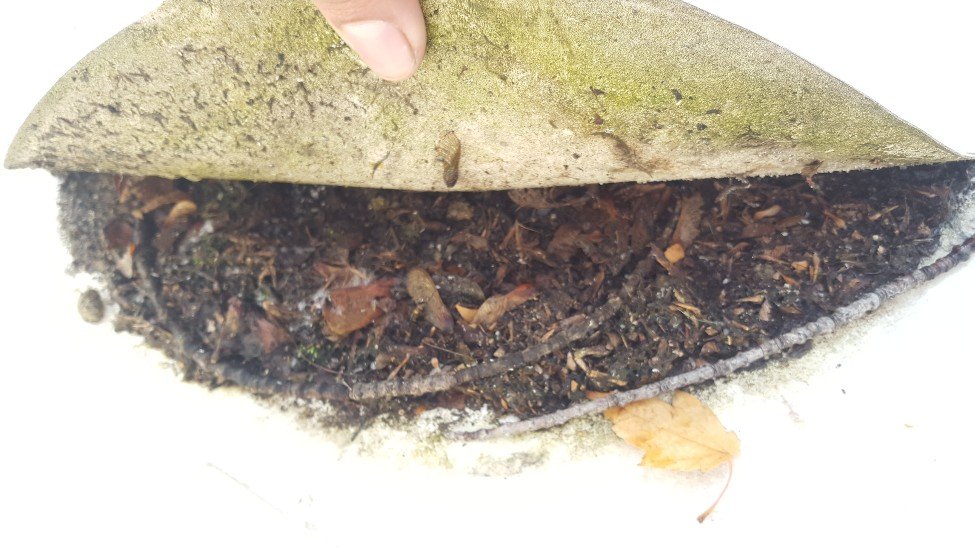
In the picture blow, you can see an extreme close-up and really get a look at all the trash and debris that was washed into the flashing cover as water ran past unimpeded.
During the hot-air welding process, the TPO material undergoes a chemical reaction known as “polymer chain entanglement.” The heat supplied by the welding machine causes the polymer chains to become more mobile and intertwine with the chains from the adjacent membrane section. As the welded area cools, these entangled chains become locked in place, forming a permanent, seamless connection.
In addition to hot-air welding, TPO roofing systems may also incorporate other specialized components and materials, such as pre-fabricated pipe boots, corner flashings, and sealants. These accessories are designed to work in tandem with the TPO membrane, ensuring a comprehensive and watertight roofing system that can withstand the elements and protect the building envelope.
Proper installation, attention to detail, and adherence to manufacturer specifications are crucial for the long-term performance of TPO roofing systems. Regular maintenance, inspections, and timely repairs can help prevent issues like the delaminated pipe boot mentioned in the opening paragraph, ensuring the roof’s integrity and extending its service life.
GL Barnhart Construction can help with flat roof repair, upkeep, and maintenance. Flat roofs like the ones here in Capitol Hill and DC need a contractor like GL Barnhart Construction who is both a specialist and actually cares and takes their work seriously. Its not that these roofs necessarily are onerous to maintain, but they need to be treated with a stewardship type of approach and have repairs and upkeep handled methodically. Reach out to us at www.glbarnhart.com if we can help.
Comments